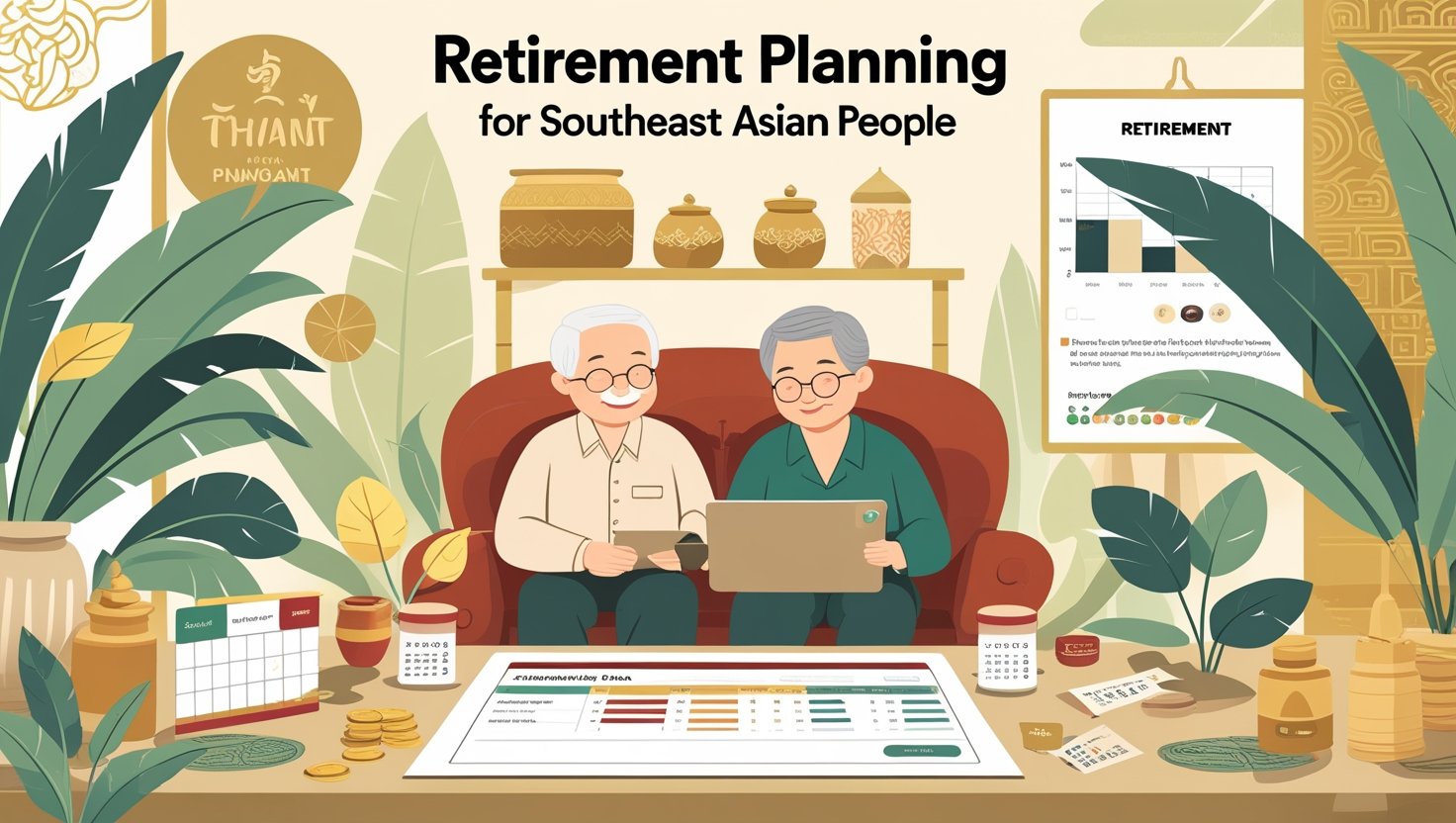
For people in Southeast Asia, retirement planning is no longer an optional choice but a necessity. As time goes by, people are living longer lives, but their financial security is declining. Often, people do not save during their youth and become dependent on others in their old age. The traditional family system was strong in Southeast Asia, where children took care of their parents, but now the times are changing. This system has weakened due to urbanization, nuclear families, and the rising cost of living. For this reason, planning and saving for retirement have become very important for everyone.
Retirement planning is not just about saving money; it is a strategy in which you arrange for income sources, health coverage, and a comfortable lifestyle for your future. Many people in Southeast Asia work in the informal sector, where there are no pensions, so they have to be more proactive. If planning is not done in youth, the financial pressure and dependency increase considerably in old age. Therefore, it is important to understand that timely retirement planning gives you the gift of self-respect, independence, and a peaceful life. Every person should take this issue seriously and prepare a plan to secure their destiny from now onwards.
Understanding Cultural and Economic Challenges:
People in Southeast Asia face many cultural and economic challenges in retirement planning. Often, families have the belief that their children will take care of their parents, so people do not focus much on saving while young. But today, nuclear families are dying out, and people are becoming confused in their lives, due to which this traditional expectation is no longer sustainable. Many elderly people face financial difficulties due to this cultural transition.
Economic challenges are also no less. In many countries in Southeast Asia, people work in the informal sector, where there is neither a pension system nor employer-sponsored retirement plans. People are so busy with their daily needs that planning for the future does not even cross their minds. Inflation is rising and income is stagnant, making it difficult to save and invest.
Illiteracy and lack of financial awareness are also major hindrances. Many people are not familiar with the basic concepts of retirement plans, mutual funds, or insurance, due to which they make wrong financial decisions or do nothing at all. All these cultural and economic barriers together make retirement planning even more complex. Therefore, it is important that people are educated and made to understand that their best path is to take responsibility for their future. All these challenges can be faced with awareness and a little planning.
Building a Personal Savings Strategy:
Creating a personal savings strategy for your retirement is very important for everyone, regardless of their income level. Savings strategy means that you keep some part of your income aside daily, weekly or monthly, which you will use only during retirement. The first step is to analyze your monthly income and expenses. When you understand how much you spend and how much you can save, you can set a realistic saving goal.
You can start with a small amount every month, like 10% or 15% of your income. You can also set up automatic transfers so that some money is transferred directly to your savings account as soon as your salary arrives. This habit teaches you discipline and consistency.
You can divide your savings into multiple jars, like an emergency fund, short-term goals, and a retirement fund. For retirement, you have to ensure that this money remains untouched and continues to be saved through compounding.
People in Southeast Asia often delay saving, thinking that saving is not necessary right now, but with time, inflation and health costs increase. If you start saving today, tomorrow can be secure and stress-free. A personal savings strategy is the foundation of your financial freedom, which allows you not to depend on anyone else in the future.
Investment Options for Long-Term Growth:
Saving is not enough for retirement, but investing that money is also important so that it lasts for a long time. People in Southeast Asia now have many investment options available that can help them achieve their retirement goals. A good investment strategy means that you invest your money in a place where the risk is under control and the return is good.
Mutual funds are a common and beginner-friendly option. In these, your money is invested in stocks and bonds of multiple companies, which provides diversification. Apart from this, real estate is also a long-term investment in which you can earn both rental income and asset appreciation.
The stock market is also a great option, but it carries higher risk, so research and guidance are important. Retirement-specific products like provident funds, pension plans, or government-backed savings schemes are also available, which provide tax benefits.
The sooner you start investing, the more time you have to reap the benefits of compounding. It is important that you choose an investment plan according to your risk tolerance and age. Often, people think that investing is only the work of rich people, but the truth is that even small investments give good results in the long run. If you are disciplined and invest regularly, then your retirement future can be bright and secure.
Utilizing Government and Employer Pension Schemes:
Many countries in Southeast Asia have government and employer-based pension schemes that provide a lot of support at the time of retirement, but often people do not take full advantage of them. Every person should gain full knowledge about the retirement systems in their country and register for them.
Systems such as the Employees Provident Fund (EPF) in Malaysia, the Social Security System (SSS) in the Philippines, and the Central Provident Fund (CPF) in Singapore exist. These systems create retirement funds by deducting a percentage from people’s salaries. Sometimes employers also contribute, which adds to this amount.
The advantage of these schemes is that they are regulated and structured, and sometimes provide tax benefits as well. You can also make voluntary contributions to these to strengthen your fund.
If you work in a private company, you should ask whether they have an employer-sponsored pension plan. Many companies offer plans that also include employer matching, which doubles long-term savings.
People should not ignore these schemes but actively participate in them. Using government and employer pension plans makes your retirement planning easier and reliable. It acts as a base that makes you feel confident and financially secure throughout your life.
Conclusion:
Finally, the most important thing is that retirement planning should not be limited to just thinking, but it should be implemented. People in Southeast Asia often think that there is still a lot of time, but time passes very quickly. If you do not plan today, tomorrow can be difficult. Securing retirement is not just about saving money, but preparing a complete strategy that can give you emotional, physical, and financial relief.
In this blog, we have seen how to face cultural and economic challenges, how to prepare a strong strategy of savings and investment, and how to make your future stable by using government and employer schemes. Every person should do financial planning at every stage of their life, so that there is no stress or regret in the end.
The sooner you start, the easier it will be for you to achieve your retirement goals. It is important that some space is set aside in your budget for retirement savings, and this should be followed consistently. If you are disciplined, informed, and committed, your goodness will not only be filled with peace but also with dignity and self-respect. Take the step now and gift yourself a secure and happy future.
FAQs:
- Why is retirement planning important for Southeast Asian people today?
Retirement planning is now essential due to changing lifestyles, longer life expectancy, and weakening of the traditional family support system. Earlier, parents relied on their children, but with urbanization, rising costs, and nuclear families, self-reliant financial planning has become necessary. Without planning, old age can bring stress, dependency, and insecurity. That’s why starting early ensures dignity and independence in later years. - What cultural and economic challenges do people in Southeast Asia face in retirement planning?
Many people still believe that their children will support them, so they don’t save or plan early. However, cultural shifts have reduced this support. Economically, most work in the informal sector without pensions or employer retirement plans. Inflation, low wages, and lack of financial knowledge make saving difficult. These barriers can be overcome through education and awareness about personal financial responsibility. - How can I build a personal savings strategy for retirement?
Start by understanding your income and expenses. Allocate a fixed portion of income—like 10% to 15%—towards retirement. Use automatic savings to stay consistent. Divide your savings into categories like emergency, short-term, and long-term (retirement). Keep retirement savings untouched and let them grow through compounding. The earlier you start, the easier it becomes to secure your financial future. - What investment options are good for long-term retirement growth?
Along with saving, investing is key. Mutual funds are a safe and beginner-friendly option, offering diversification. Real estate provides rental income and value growth. The stock market has potential but requires knowledge and carries risk. Government schemes, pension plans, and provident funds offer tax benefits and long-term growth. Start investing early and choose options based on your risk tolerance and goals. - How can government or employer pension schemes support my retirement?
Many Southeast Asian countries offer structured retirement systems like EPF (Malaysia), SSS (Philippines), or CPF (Singapore). These plans deduct a portion of your salary and often include employer contributions. They provide security, regulation, and sometimes tax relief. You can also make voluntary contributions to increase your savings. If working in a private company, check if they offer employer-sponsored retirement plans. Participating in these schemes strengthens your retirement foundation.